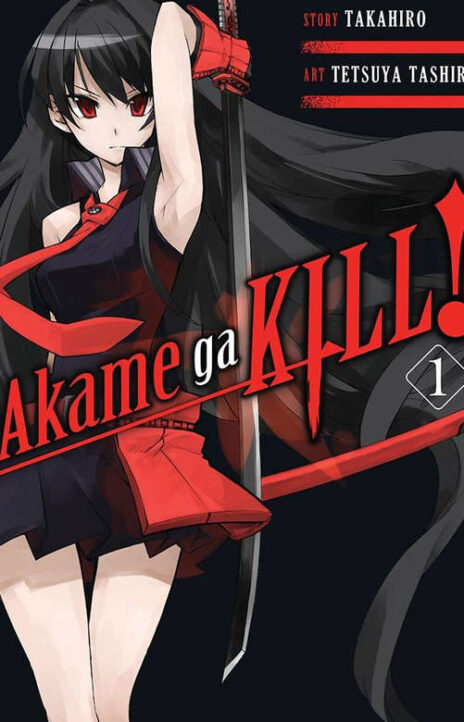
Akame Ga Kill!
Akame Ga Kill! — Quick Overview
★ 7.81/10 · MyAnimeListPG-13MangaActionAdventureSupernaturalStrategy BattlesCompleted
Akame Ga Kill! (アカメが斬る!) is a dark fantasy action manga written by Takahiro and illustrated by Tetsuya Tashiro. This intense series, published by Square Enix, follows Tatsumi, a young fighter journeying to the capital to save his village, only to uncover the Empire's horrifying corruption and join a group of assassins known as Night Raid.
| Author / Story : Takahiro | Artist / Art : Tetsuya Tashiro | Original Publisher : Square Enix |
| Format & Status : Manga (Completed) | Release Year : 2010 | Demographic : Shounen |
| Country of Origin : Japan (Manga) | Primary Genres : Action, Fantasy, Drama, Psychological, Romance, Horror, Tragedy | Core System / Theme : Lethal Assassination, Corrupt Empire, Supernatural Weapons (Teigu) |
Other Names & Verified AliasesView all
AGK • Akame Keser! • Akame Kills! • Akame Slashes! • Akame ga Kiru! • Red Eyes Sword - Akame ga Kill ! (FRoff) • Red-Eyed Killer! • Sát thủ Akame! • Убийца Акаме! • אקאמה גה קיל • อาคาเมะสวยประหาร • アカメが斬る! • 斩·赤红之瞳! • 斬·赤紅之瞳! • 아카메가 벤다!!
Full Synopsis & Narrative BreakdownRead story
In a world plagued by corruption and injustice, a naïve young fighter named Tatsumi sets out from his impoverished village with two childhood friends, hoping to earn money in the Imperial Capital. His dreams are shattered when he witnesses the systemic depravity and cruelty perpetuated by the Empire's elite. After his friends are murdered by a noble family, Tatsumi is recruited by Night Raid, a notorious group of assassins working for the Revolutionary Army to overthrow the tyrannical government. Alongside deadly operatives like Akame, Mine, Leone, and Sheele, Tatsumi must navigate a morally ambiguous war, facing off against powerful, unique "Teigu" wielders from the Empire, and making unimaginable sacrifices in the name of a better future. The series explores themes of loyalty, justice, and the heavy cost of revolution in a brutal, unforgiving world.
What to Expect
Readers should prepare for a fast-paced, action-heavy narrative with a surprisingly dark and psychological undertone. Combat is brutal and often fatal, emphasizing strategy, unique supernatural weapons known as Teigu, and characters pushing their limits. The world-building details a grim, corrupt Empire and the desperate fight for change, where no character is truly safe. Expect significant character development, moral dilemmas, and a strong sense of tragedy woven throughout the high-stakes battles.
Who Will Enjoy This
This manga is best suited for readers who enjoy dark fantasy, morally grey protagonists, and high-stakes battles where character deaths are a constant possibility. Fans of tactical combat systems involving unique abilities and those who appreciate stories about fighting against oppressive regimes will find Akame Ga Kill! compelling. If you seek a series that doesn't shy away from tragedy and explores the difficult choices made in revolution, this is for you.
Similar Series You Might Like
If you enjoy the intense action and dark themes of Akame Ga Kill!, consider reading Bleach for its focus on elite combat units fighting supernatural threats with unique powers, and a strong sense of camaraderie within a dangerous world. For a story about a protagonist adapting to a powerful, unconventional organization and growing stronger, albeit with a lighter tone, check out Welcome to Demon School! Iruma-kun.
Key Early Characters (Tatsumi, Akame, Mine, Leone)View cast
Tatsumi: A kind-hearted swordsman from a rural village. Initially naive, he seeks to earn money in the capital but is quickly disillusioned by its corruption. He eventually joins Night Raid, wielding his sword skills and later the Teigu, Incursio, to fight for justice and protect his newfound comrades.
Akame: The titular "Red-Eyed Killer" and one of Night Raid's deadliest members. She is a highly skilled swordswoman, stoic and disciplined, who wields the demonic blade Murasame, which instantly kills those it cuts. Her motivation stems from a desire to create a just world, even if it means bearing heavy burdens.
Mine: A sharp-tongued, yet caring, sniper within Night Raid, known for her powerful Teigu, Pumpkin. This rifle amplifies its destructive power based on the user's emotional state. Despite her harsh exterior, she deeply cares for her comrades and fights fiercely against the Empire's oppression.
Leone: A boisterous and free-spirited member of Night Raid. She possesses the Teigu, Lionelle, which grants her enhanced physical abilities, regeneration, and animalistic features. Leone acts as an older sister figure to Tatsumi, using her street smarts and formidable strength to contribute to the revolution.
Frequently Asked Questions3 Answers
What is the main premise of Akame Ga Kill!?
The series follows Tatsumi, a young villager who travels to the corrupt Imperial Capital seeking fortune. After witnessing the atrocities committed by the Empire, he is recruited by Night Raid, a band of assassins aiming to overthrow the tyrannical government and bring about a new era of justice.
Is the Akame Ga Kill! manga completed?
Yes, the Akame Ga Kill! manga series is fully completed. It ran from 2010 to 2016, concluding with a total of 15 tankōbon volumes and 78 chapters. This allows readers to experience the entire dark and dramatic story from start to finish without waiting for new releases.
Does the Akame Ga Kill! manga have an anime adaptation?
Yes, Akame Ga Kill! received a popular anime adaptation that aired in 2014. While the anime covers the core narrative, it deviates significantly from the manga's ending in its latter half. Many fans recommend reading the manga to experience the original conclusion to the story.
95 Chapters